
Observation is not interpretation
What happened and what you made of it are not identical. Separating them lowers the chance of treating an impression as a fact.

Critical thinking begins when you create a little space between what happened and what you immediately say about it. In that space you can see more clearly what you observed, what you interpreted, what you assumed, and which next step makes sense.
Many fast conclusions take shape before you notice where assumption entered the picture. Critical thinking brings order to the steps through which the mind arrives at a conclusion and helps you choose more carefully what to believe and what to do.
What happened and what you made of it are not identical. Separating them lowers the chance of treating an impression as a fact.
What you feel matters. Even so, emotional intensity does not settle on its own what is true or what the other person meant.
A rushed label can lock a situation. A more precise phrasing leaves room for context, evidence, and adjustment.
You can think quickly and argue well, then defend the first conclusion too easily. Clarity asks for checking, not only mental speed.
What you directly saw, heard, or experienced before placing a label on the moment.
The meaning the mind gives the situation right away. This is where the first shortcuts and many quick conclusions appear.
What you fill in while information is still missing. Sometimes useful, sometimes a shortcut into certainty.
What you can support concretely, what still needs checking, and what part of the story remains uncertain.
The next step chosen with more care: what you keep, what you reframe, and which action makes sense now.
Research is on firmer ground when it comes to monitoring your own thinking, evaluating evidence, and describing an experience more precisely than when it promises perfectly objective thought.
Emotion and wording influence how you interpret a moment. That still does not mean any phrasing creates reality from scratch.
Critical thinking does not promise flawless conclusions or the disappearance of bias. It offers a more careful way to work with both.
A real pause before conclusion can begin with body rhythm. Guided breathing slows the reaction enough to make observation possible.
When you record the event, the emotion, and what kept repeating, it becomes easier to notice where interpretation overlapped with fact.
Clarity does not come from one isolated insight. Small habits create the repetition that makes reflection more stable over time.
More language for nuance, fewer rushed labels. Results are framed responsibly as personal exploration.
Clarity appears more often when you slow down enough to see where the fact ends and the interpretation begins.
It is the practice of checking the path between experience and conclusion: what you observed, what you interpreted, what you assumed, and what you can support with evidence.
Not really. It is closer to delaying quick acceptance or quick rejection. You ask better questions and leave room for context, language, and nuance.
They overlap, but they are not the same. You can be highly intelligent and still defend a rushed conclusion. Critical thinking also asks for checking, tolerance for uncertainty, and willingness to revise an idea.
Emotions tell you something real about the moment and about yourself, yet they do not settle on their own what is true or which action deserves to come next.
Often through good questions: What did you see directly? How do we know? What other explanation might exist? The same style of question still matters in adult life.
Illusim can support the pause, the clearer wording, and the repetition that practice needs. Breathing, journaling, habits, and descriptive questionnaires make automatic reactions easier to notice and leave more room for deliberate choices.
Available on the App Store
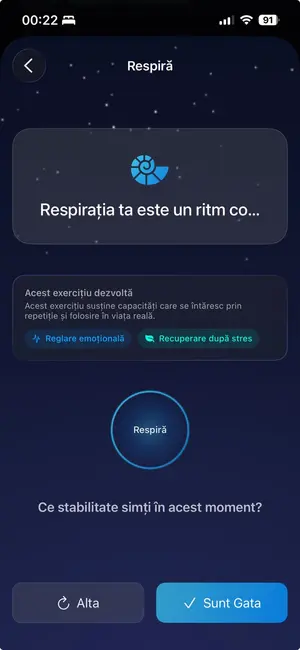
Illusim gives you a simple space for pause, observation, and guided reflection, right on iPhone.
Download on the App Store