
Regulation before performance
When breathing becomes slower and more intentional, the body can move out of a reactive rhythm. In many situations this supports attention and lowers overwhelm.

Many of the experiences we call clarity, calm, or willpower emerge from the interaction between attention, physiology, environment, and repeated behavior. That is why Illusim does not start only with motivation. It starts with small, repeatable, observable practices.
When breathing becomes slower and more intentional, the body can move out of a reactive rhythm. In many situations this supports attention and lowers overwhelm.
Mindfulness is not about emptying the mind. It is about returning, again and again, to what you notice now. That return is the trainable part.
Contemporary psychology understands self-control partly as a result of environment, motivation, and routine design. Good habits reduce constant inner conflict.
When you write down what you felt, what you did, and what repeated, patterns become visible. That can support better decisions and less automatic reaction.
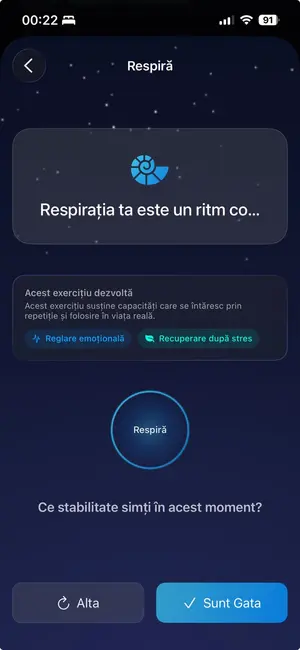
Breathing prompts and short reflective questions can support attention regulation and a gentler transition from stress toward presence.
Habit systems matter not because they promise perfection, but because stable repetition lowers dependence on momentary motivation.
Well-shaped questions can shift attention from vague rumination toward concrete observation: what happened, what matters, what you want to adjust.
Illusim questionnaires are designed as tools for personal exploration, with multi-item scoring and descriptive interpretations rather than clinical diagnosis.
Research is more coherent here: physiological regulation, attention training, and habit formation have enough evidence to justify simple daily practices.
Some body-based and nervous-system models are useful lenses, but they should not be presented as final truth or guaranteed treatment.
Illusim supports personal reflection and daily practice. It does not replace psychotherapy, clinical assessment, or medical support when those are needed.
Breathing becomes an entry point into regulation, while short questions help you notice what is happening right now.
Instead of relying only on willpower, you build contexts and repetitions that make the behavior easier to resume.
Self-knowledge becomes more nuanced when you use multiple items, clear dimensions, and responsible result framing.
The aim is not perfection. It is noticing patterns and gradually adjusting decisions, reactions, and daily rhythm.
In real life, mind changes more reliably when you work with body rhythm, attention, and repeatable contexts, not only with short bursts of enthusiasm.
Illusim is a self-practice app for mental clarity, reflection, and consistency. It brings together breathing exercises with reflective prompts, progressively tracked habits, a structured Journal, and descriptive questionnaires for self-observation.
Inside the app you will find breathing prompts with short reflective questions, habit systems with progressive levels, a Journal where you can capture events, emotions, and people involved, plus self-assessment questionnaires with descriptive interpretation.
A practical starting point is the breathing flow together with one habit that feels easy enough to sustain. After that, the Journal and questionnaires can help you gain clearer self-observation.
Illusim does not promise instant reset, but it offers simple tools that can slow down reactivity: guided breathing, orienting questions, and small practices that bring attention back to observation. In many contexts, that can make the shift from agitation toward presence easier to support.
No. The questionnaires are built for personal exploration and descriptive scoring across multiple items or dimensions. They help you notice patterns, values, thinking styles, or skills, but they do not replace clinical assessment.
No. Illusim supports daily practice and self-observation, but it does not replace psychotherapy, clinical assessment, or medical support. If you are dealing with intense or persistent distress, or your daily functioning is seriously affected, seek qualified help.
Start your mind journey today
Open Illusim whenever you need a few minutes for breathing, reflection, and more calm. During the trial you can also explore the personality assessment through descriptive self-discovery questionnaires, then continue at your own pace.
Descarcă din App Store